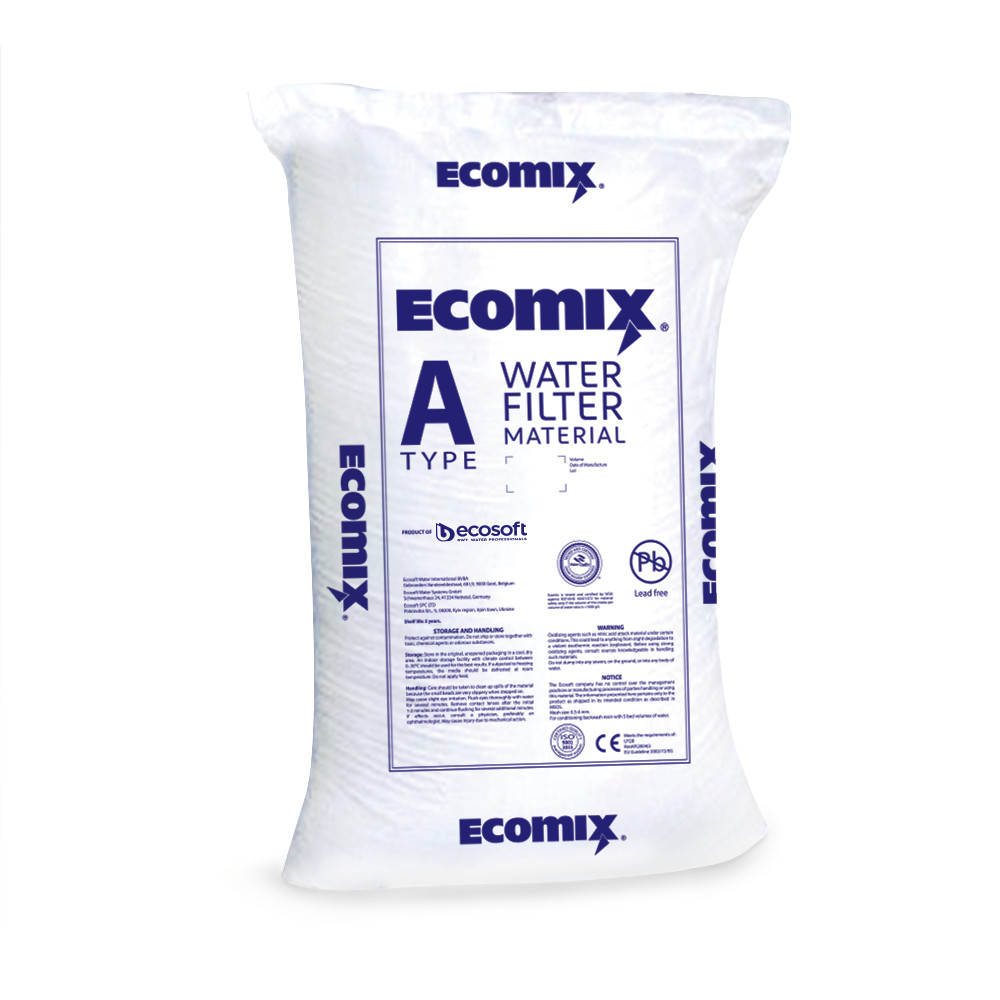
Ecomix® A is a multi-component composite filter media for problem water. It copes with seasonal fluctuations in water composition.
Soft, clear water with a bluish tint thanks to Ecomix® A filter media.
KEY FEATURES
Soft water free of iron and manganese;
Eliminates metallic taste of water;
Improves water colour and odour;
5 years of reliable service life
An effective solution to the 5 most common water quality problems in 1 filter.
SPECIFICATIONS
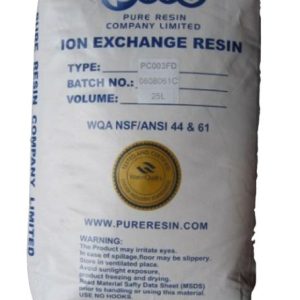
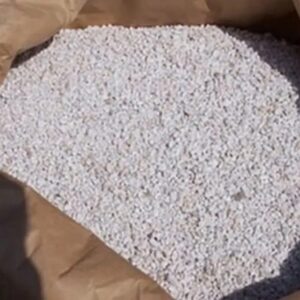
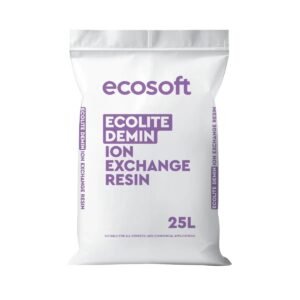
Filter media in packaging.
TECHNICAL SPECIFICATIONS
Maximum operating temperature – 40 °C
Service flow rate – 20–25 m/h
Backwash flow rate – 10–15 m/h
Brine (slow rinse) flow rate – 3.5 m/h
Minimum bed depth – 500 mm
Recommended bed depth – 800 mm
Freeboard – 40% or more
Salt consumption – 100 g/l of media
Brine concentration – 8–10%.
Water consumption per regeneration – under 10 l/l
Ion exchange capacity – 35 g CaCO3/L
Feed water parameters
Hardness – 15 mEq/L
Iron – 15 mg/l
Manganese – 3 mg/l
Chemical oxygen demand – 20 mg O₂/L
Ammonium – 4 mg/l
pH – 5–9
Maximum TDS – 4000 mg/l
Clear water in the bathroom, healthy skin without dryness
Softens water, reduces iron and manganese
Appliances without scale, tiles and plumbing without white stains
Low concentration of scale-forming ions
Space saving
One filter solves 5 water problems
KEY ADVANTAGES
– The main water problems are solved with one filter instead of 2–3 filters.
– Stable purified water quality throughout the service life.
– Little salt is used for regeneration.
WHERE IS IT USED?
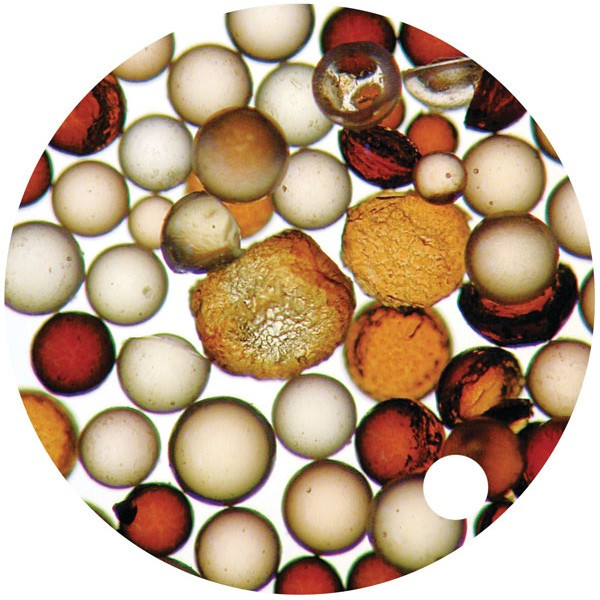
Ecomix® A is used in household and industrial Ecosoft FK-type filters. Ecomix is loaded into the filter as a mixture and separates into five layers during the first regeneration. Ordinary table salt is used for regeneration.
Filtration systems with Ecomix® A media are widely used in both households and industry.
1. Inert material – improves backwashing.
2. FerroSorb sorbent reduces iron and manganese.
The iron reduction mechanism consists of adsorption (fixation) on the media surface, oxidation, formation of an active layer and autocatalytic oxidation. As a result, the main forms of iron are reduced: dissolved, oxidised, organic and colloidal.
The best iron and manganese removal efficiency is achieved when water from the well is fed directly to the Ecomix media.
3. HumiSorb sorbent – reduces permanganate oxidisability and improves water colour.
Organic compounds are removed by an electrostatic hydrophobic interaction mechanism.
4. Ion exchange resin (cation resin) – softens water.
When water is filtered through the cation resin, Ca2+ and Mg2+ hardness ions are replaced by Na+ ions. During regeneration, calcium and magnesium ions are flushed to the drain and the cation resin is recharged with sodium ions from the brine.
5. Quartz sand is used to distribute the water flow evenly through the filter media during backwashing.
REGENERATION OF ECOMIX® FILTER MEDIA
During operation, the filter media is periodically regenerated with a salt solution, like ordinary ion exchange resin.
– In the brine regeneration stage, calcium and magnesium ions are replaced by sodium ions.
– Iron and manganese compounds are removed by surface abrasion of the FerroSorb grains in the fluidised bed during backwashing.
– The reversible sorption mechanism of organic compounds on HumiSorb allows effective regeneration.
PARAMETERS
Volume 12/25 L
Backwash flow rate 10–15 m/h
Maximum operation temperature 40 °С
Service flow rate 20–25 m/h
Recommended bed depth 800 mm
Salt consumption 100 g/L
KEY FEATURES
- Soft water without iron, manganese and NOM;
- Eliminates metallic taste of water;
- Reduces colour and smell of water;
- 5 years of reliable service life
- Effective solution of 5 most common water quality problems in 1 filter.
SPECIFICATION
The filter media in packaging.
Technical characteristics
- Maximum operating temperature – 40 °C
- Service flow rate – 20-25 m/h
- Backwash flow rate – 10-15 m/h
- Brine (slow rinse) flow rate – 3.5 m/h
- Minimum bed depth – 500 mm
- Recommended bed depth – 800 mm
- Freeboard – 40% or more
- Salt consumption – 100 g/L of media
- Brine concentration – 8-10%
- Water consumption per regeneration – under 10 L/L
- Ion-exchange capacity – 35 g CaCO3/L
Feed water requirements
- Hardness – 15 mEq/L
- Iron – 15 mg/L
- Manganese – 3 mg/L
- Chemical Oxygen Demand – 20 mg O₂/L
- Ammonium – 4 mg/L
- pH – 5–9
- Maximum TDS – 4000 mg/L