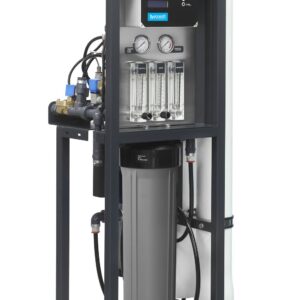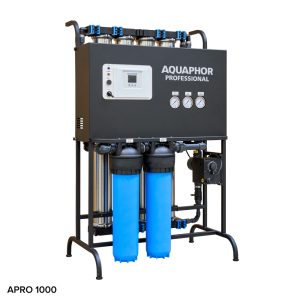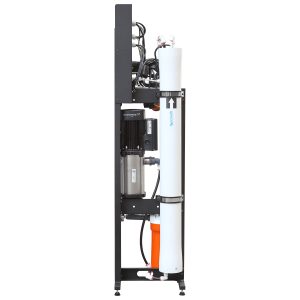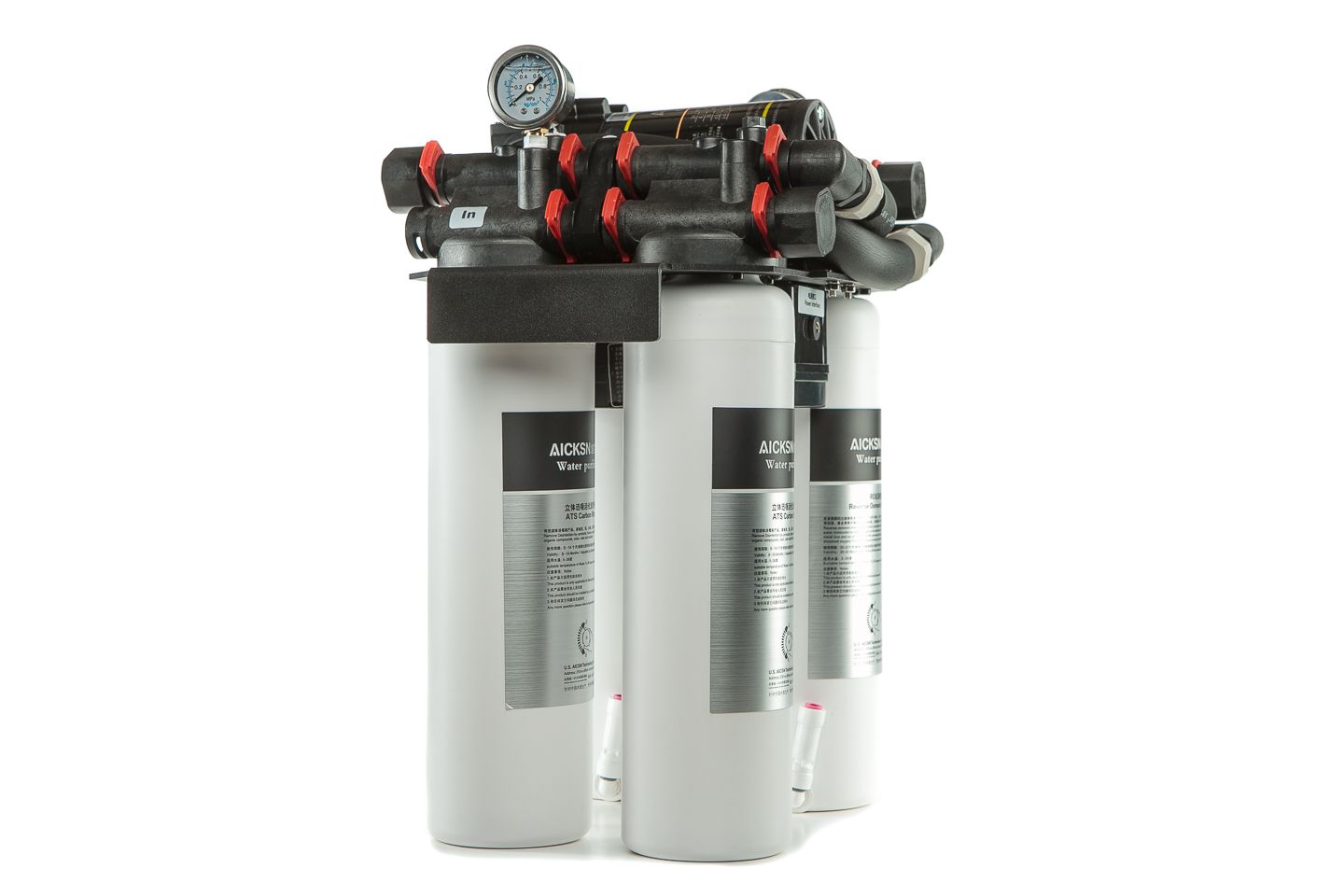
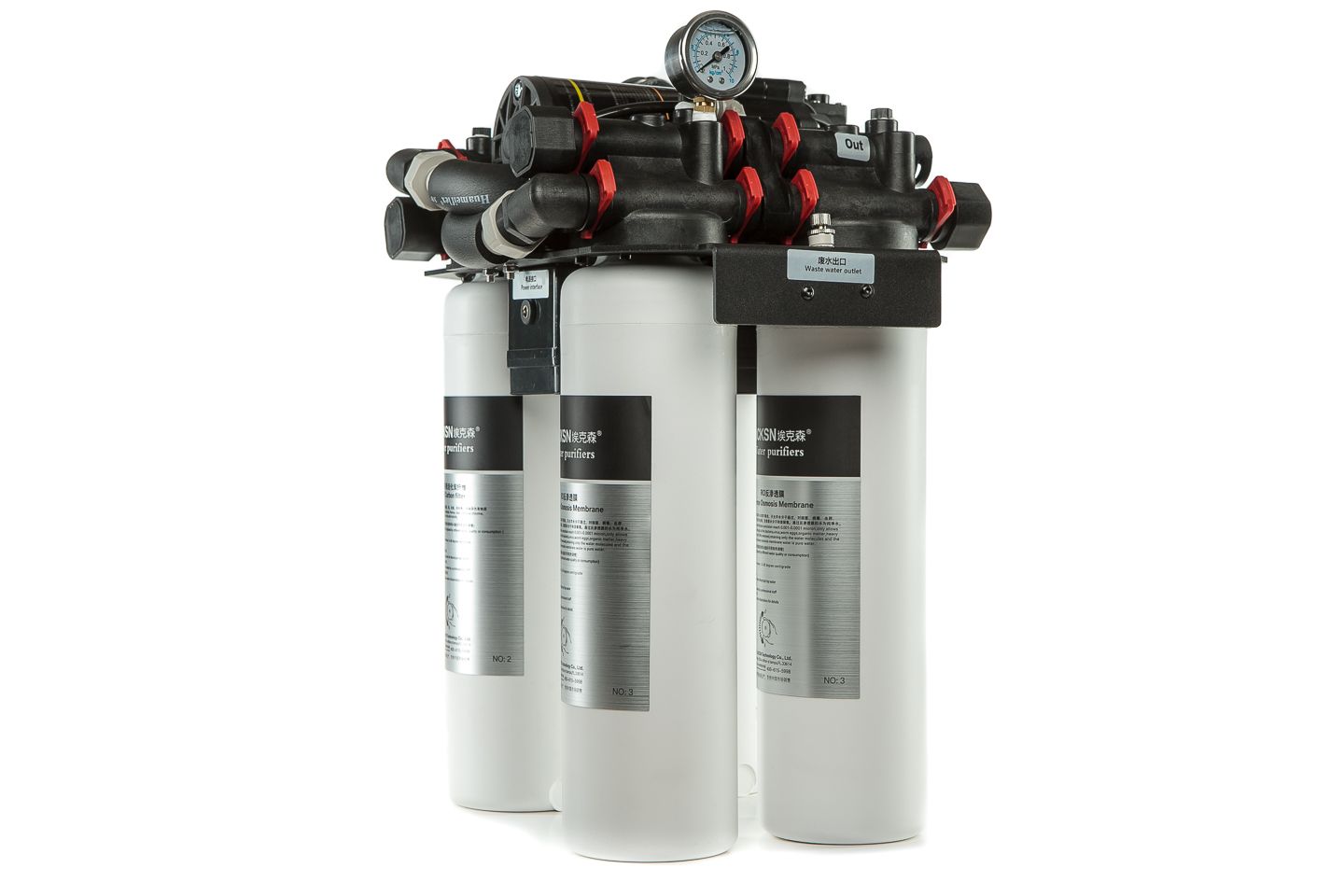
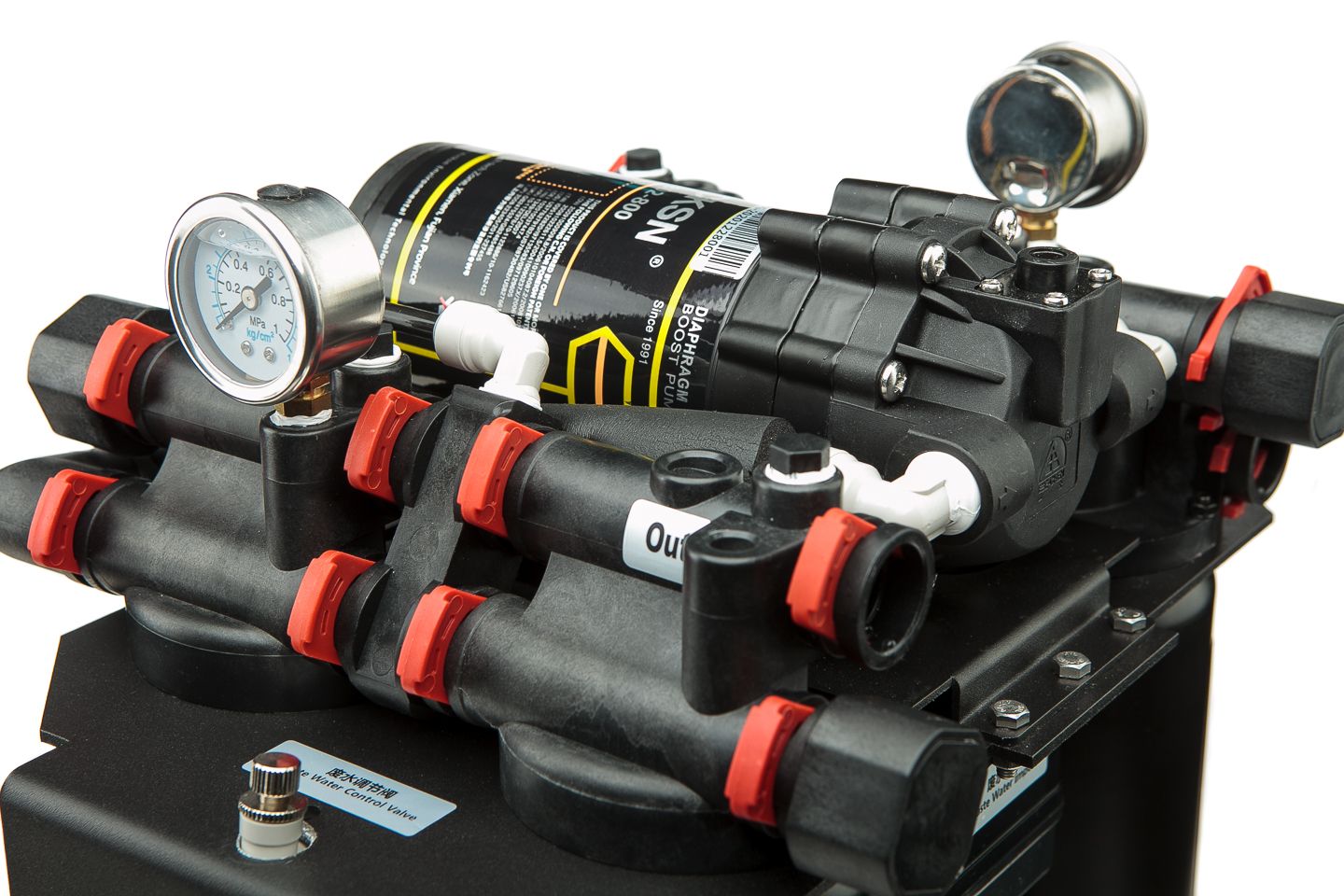
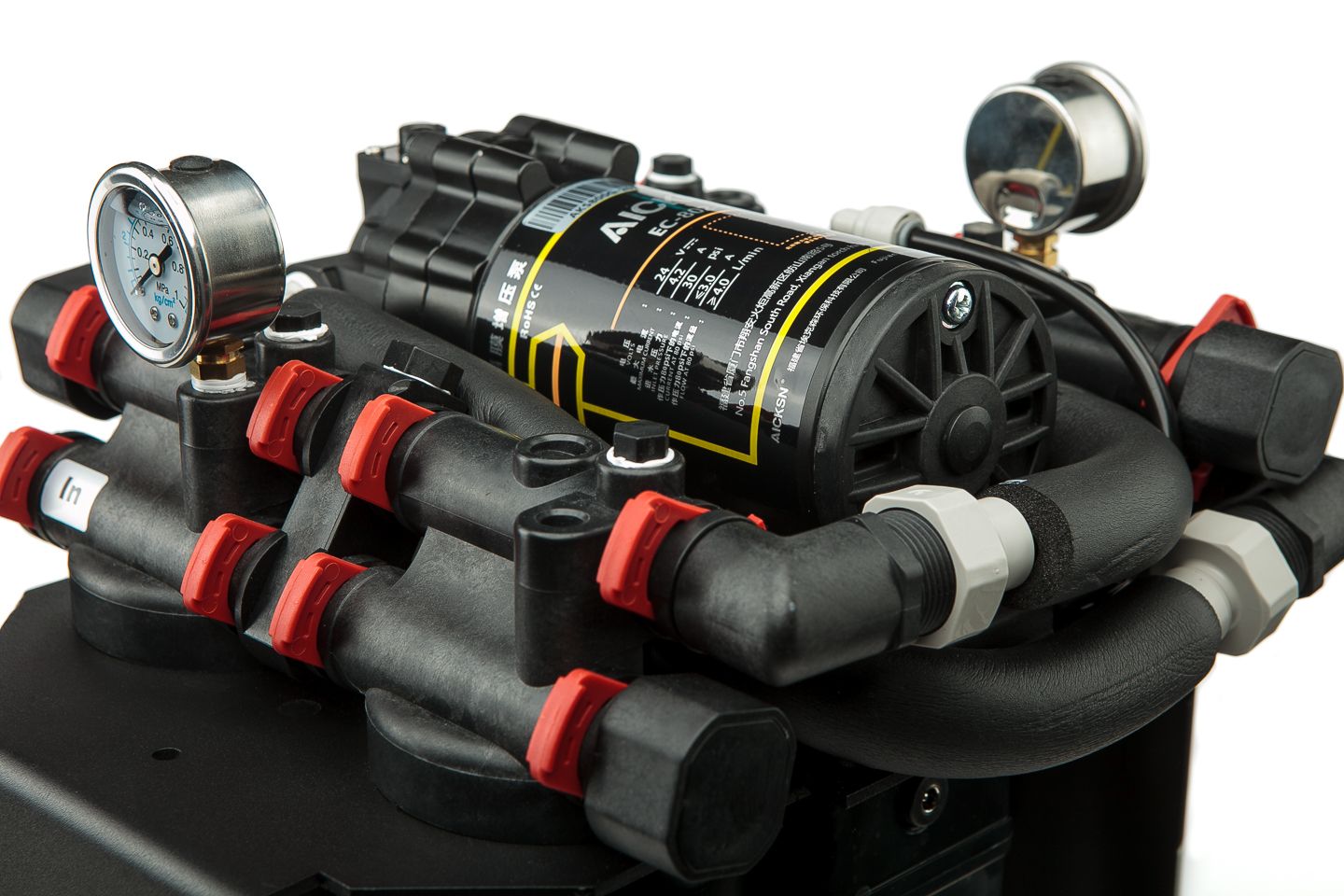
A reverse osmosis (RO) system with an advanced RO membrane and multi-stage pre-treatment; filtration accuracy effectively reaches 0.0001 microns, retaining most contaminants, organic and inorganic compounds, and unwanted tastes and odours of tap water.
The entire water production process is fully automatic.
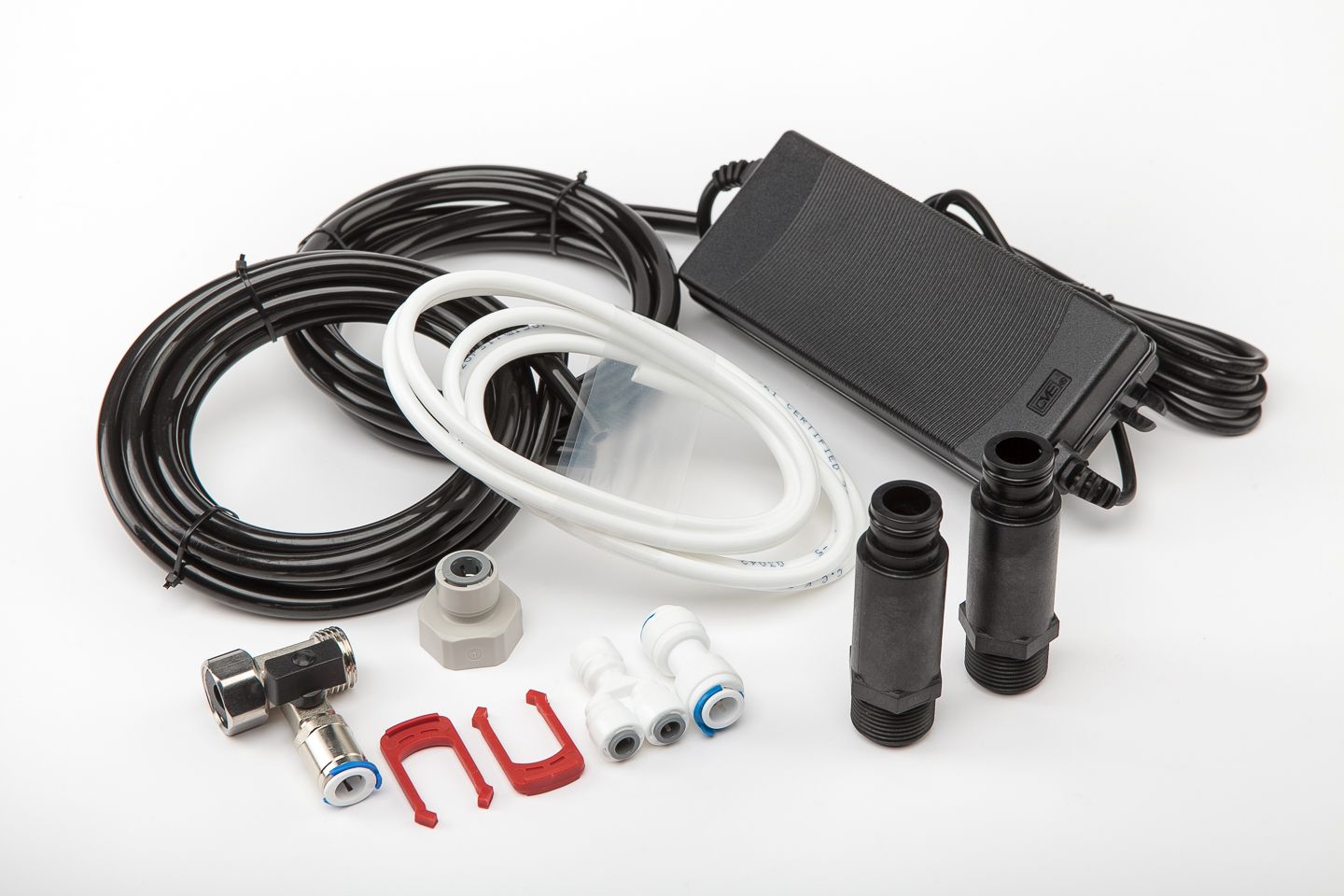
INSTALLATION ACCESSORIES
You will receive a fully working system, ready to connect to the water supply. All equipment can be installed by yourself without affecting the warranty. The kit includes all the parts and accessories needed to connect the system.
TECHNICAL SPECIFICATIONS
Membrane capacity 600GPD x 2 membranes
Clean water flow LPH 190 LPH
Number of membranes 2
Number of ACF filters 2
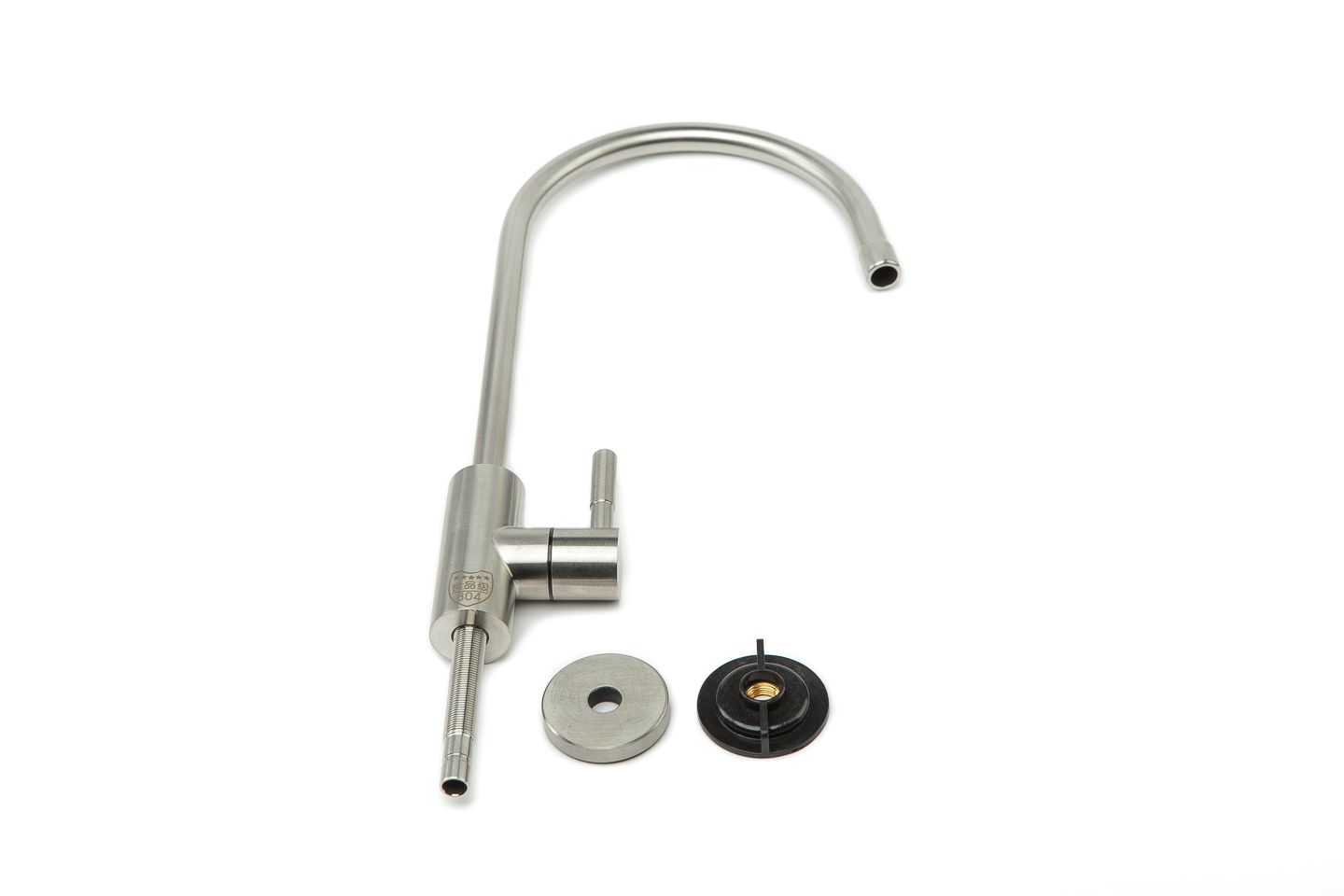
Faucet Yes
Faucet connection 3/8
3/8 tubing 2 pcs
1/4 tubing 1 pc
Water connection fitting 1/2
Water supply tubing 3/8
Purified water tubing 3/8
Drain clamp 1 pc
Waste water tubing 1/4
Y-fitting 1 pc
1/4 drain saddle None
Power supply Yes
Rated voltage – Input 110-220V 50-60Hz
Output voltage – Output 24V / 5A
Inlet water pressure 1.5–4 atm
Inlet water temperature 5–45℃
Automatic flushing Optional feature
Waste water ratio Manually adjustable
Maximum inlet water TDS, ppm 1500*
Water purification efficiency %* 98
Connection sizes (inlet, outlet, concentrate) 1⁄2″ / 3⁄4″ / 3⁄4″
Pump parameters
Voltage 24V
Current 4.2A
Recommended inlet water pressure 2 atm
*Inlet water with chloride concentration above 500 ppm is not recommended
INSTALLATION ACCESSORIES
You will receive a fully working system, ready to connect to the water supply. All equipment can be installed by yourself without affecting the warranty. The kit includes all the parts and accessories needed to connect the system.
ACTIVATED CARBON FIBRE FILTER (ACF)
Removes sand, large particles, chlorine and organic residues from water. Reduces turbidity and colour of the feed water and filters visible particles. Filtration accuracy: 0.5 µm
Filter replacement: every 6–12 months or as needed
CAPACITY: 34000 L
WORKING PRESSURE: 0.1–0.6 MPa
FEED WATER TEMPERATURE: 5-38 °C
FLOW: 2.5 T/h
RO MEMBRANE
An extremely fine-pored filter (pore size 0.0001 micron) working on the reverse osmosis principle. When pure water and a salt solution are separated by a semi-permeable membrane that lets only water molecules through, the pressure (concentration) difference on the two sides of the membrane makes water molecules pass to the salt solution side. This continues until the salt concentration on both sides is equal. This process is called direct osmosis. When highly mineralised water is treated with a reverse osmosis membrane, pressure exceeding the osmotic pressure is applied and the water molecules are forced through the membrane in the direction opposite to direct osmosis, i.e. from the highly mineralised water into the pure water compartment. The membrane pores are much smaller than viruses and bacteria, so these are removed during filtration. Heavy metals, dissolved substances and salts are removed as well.
The main parameter that defines a membrane’s characteristics is its capacity. Capacity is usually measured in GPD (gallons per day). It shows how much water the membrane can purify per day. 1 gallon = 3.78 litres (so if a membrane’s capacity is 100 GPD, up to 378 litres of water can be purified per day).
Water entering the membrane is separated into two streams: purified water and highly saline (concentrated) water, which contains all the separated salts and contaminants. Drinking water is supplied to the faucet or stored in pressure tanks until needed. The concentrate is discharged to the drain. The ratio of drinking water to concentrate can vary (from 1:1 to 1:7) and depends on the quality and pressure of the water supplied to the reverse osmosis system and on the system’s features, such as whether it has a pump.
The membrane is replaced every 24–84 months or as needed, depending on water consumption and the membrane’s capacity.
HOW TEMPERATURE AFFECTS RO WATER PRODUCTION
A lot of money is wasted on replacing membranes unnecessarily because the effect of water temperature on reverse osmosis (RO) system performance is overlooked. When the water flow drops, it is usually assumed that the membrane is fouled, while in fact the feed water temperature has simply dropped, significantly reducing membrane output. This often happens because the lower feed water temperature in winter is forgotten. RO system manufacturers get calls from customers: “For some reason the system produces 30–50% less water than before, although the feed water conditions have not changed.” Such a conclusion ignores temperature.
FACT: When water is colder, it is “thicker” and the flow rate from the membrane decreases. As water warms up, it becomes “thinner” and the flow rate from the membrane increases. All flow rates given in reverse osmosis system and membrane specifications are calculated at a water temperature of 25 ℃. As the water temperature changes, so does the flow rate, because warmer water is less viscous and diffuses faster, making it easier for it to pass through the RO membrane.
Temperature correction factor. Temperature affects the product flow through the membrane: high temperature increases the product flow, low temperature decreases it. To determine the membrane flow rate at a different temperature (not 25 ℃), multiply the RO membrane flow given in the specification by the temperature correction factor shown in the table. The result is the product flow at that temperature.
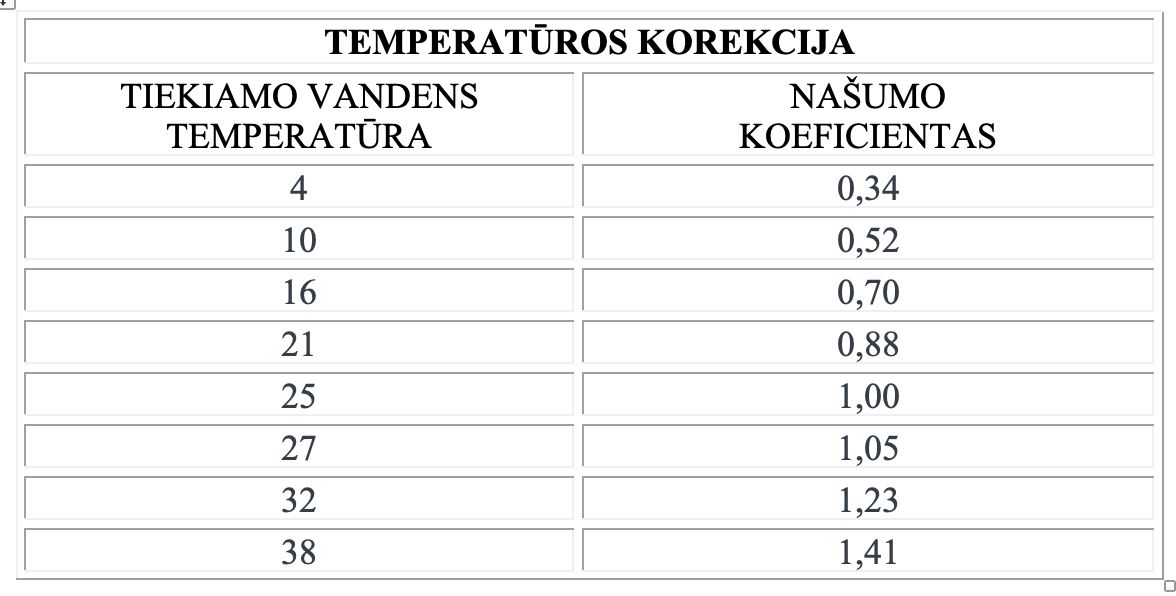
Example: a 100 GPD membrane flow rate at 25 ℃, 65 PSI (4.4 ATM) = 378 litres per day. What is the product flow at 10 ℃?
Answer: use the temperature correction factor (from the table) = 0.52.
The new product flow at 10 ℃ is 378 x 0.52 = 196 litres per day.
Feeding water from a water heater into an RO unit to raise the water temperature is not recommended. Water above 38 ℃ most often damages standard RO membranes, and the tanks of all water heaters contain contaminants and sediment that can damage the membrane and the RO unit.
When replacing the reverse osmosis membrane, we recommend also replacing the flow restrictor so that the membrane works optimally.
Here are a few examples:
– A 300–350 cc flow restrictor suits a 50 or 75 GPD membrane.
– For a 100 GPD membrane, a 420–450 cc flow restrictor is better.
– For a 150 GPD membrane, a 550–700 cc flow restrictor can be used.
A correctly chosen flow restrictor helps ensure efficient membrane operation.
Analysis of the most common membrane problems
1. Equalisation of osmotic pressure (for RO systems with pumps)
– When a membrane is not used for a long time, the osmotic pressure on both sides of the membrane can equalise. This means there is not enough pressure difference, which is essential for effective water filtration. As a result, the filtration process becomes less effective and the total dissolved solids (TDS) level in the purified water can increase.
Solution:
When starting to use the system after a longer idle period, it is recommended to run a certain amount of water through the membrane. This helps restore the pressure difference and flush out substances that may have accumulated while the system was idle.
2. Membrane fouling
Long periods without use can lead to fouling of the membrane surface, as accumulated substances can stick to the membrane and reduce its permeability and efficiency.
Solution:
Regular use of the system helps maintain a constant pressure difference and reduces the risk of membrane fouling.
It is important to regularly check and replace the pre-filters that protect the membrane from larger particles. This extends the membrane’s service life and ensures effective filtration.
Checking membrane quality
Use a TDS meter to monitor the quality of the purified water. If the TDS level starts to rise, this may mean that the membrane’s efficiency has decreased and it needs to be replaced.
3. Soft water (after softening filters)
If your osmosis system is installed after a water softener, the membrane’s efficiency and service life can increase several times. The water softener removes hardness minerals such as calcium and magnesium compounds, which over time can clog the membrane and reduce its permeability. With the reduced load on the membrane, the system works more efficiently and the membrane needs replacing much less often.
QUICK-CHANGE FILTERS
Quick-change filters are filters mounted in housings with a quick-connect fitting. There is no need to disconnect hoses, remove the filter housing, unscrew it, take out the filter, insert a new one and so on. Replacing such filters usually takes just a few easy moves. These filters are slightly more expensive, but anyone can replace them easily – they are popular with people who appreciate being able to service the system without getting their hands wet.
PUMP
Pumps are used to increase the pressure in osmosis or other filtration systems when the mains water pressure is insufficient. A pump may also be needed in a filtration system when the water contains a lot of dissolved solids (e.g. a TDS reading of 600 ppm) so that the membrane works effectively. The pump power required depends on the capacity of the membrane used in the system.
NOTE
Diaphragm RO pumps cannot run without water; a pump running dry damages its diaphragms very quickly.
Diaphragm RO pumps working with hard water or water heavily contaminated with iron fail much faster – the pump diaphragms need to be replaced.
Diaphragm kits are available from us.
SINGLE WATER FAUCET
A single-flow faucet mounted on the countertop or the edge of the sink, through which the filtered water flows.
PPM
The usual unit for measuring TDS is PPM (parts per million) (1 ppm = 1 milligram of dissolved solids per litre of water).
PRE-FILTERS
For membranes to last longer, the water must be pre-treated. Osmosis systems use pre-treatment filters for this. A pre-filter collects particles before the water reaches the membrane, which is usually more expensive than the pre-filter. The membrane is designed to filter the very smallest particles. Pre-filters help the membrane last longer and save you the money you would otherwise spend on frequent membrane replacement.
FILTER MAINTENANCE AND REPLACEMENT INTERVALS
For the unit to work optimally, it needs regular maintenance. How often maintenance is needed depends on the feed water quality, how often the system is used and the amount of water filtered. The filter replacement intervals given for the filter are indicative. Remember that filter replacement frequency may vary, so we recommend monitoring changes in TDS in the purified water (measuring it at regular intervals with a TDS meter). If the TDS level changes significantly, replace the filters.
CONNECTION PARAMETERS
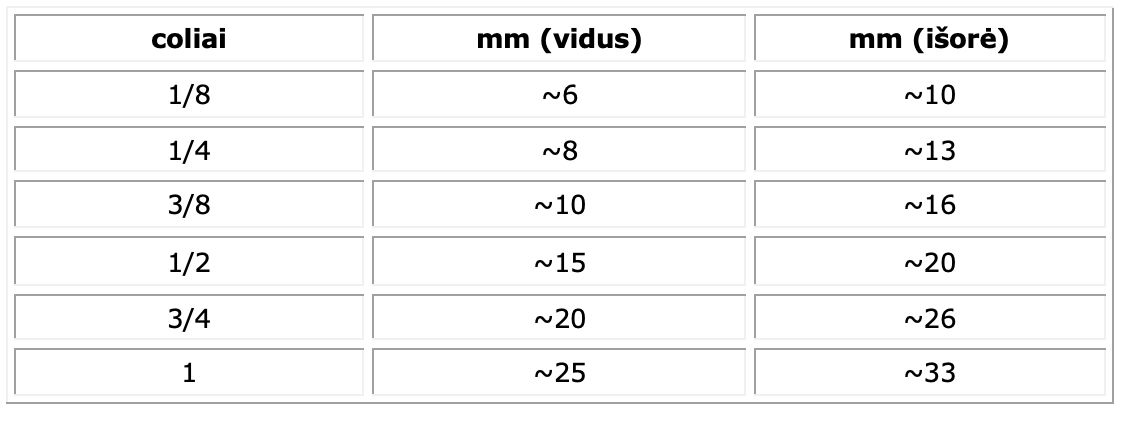
Connection sizes are usually given in inches, which causes confusion about which fittings to choose, as we are used to metric units – in this case millimetres. The ratio of inches to millimetres for fittings is roughly as follows; measuring with a caliper is recommended: