Cartridge set for WaterLovers UfPad systems

27.17 €

Out of stock

COMPATIBLE SYSTEMS

Compact ultrafiltration system WaterLovers UfPad, code WL-UF-PAD

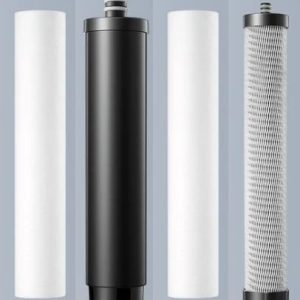
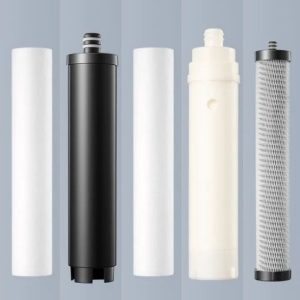
THE KIT INCLUDES

PP 5 MICRON FILTER

A mechanical filter whose function is to physically remove sediment, dirt and any particles using a barrier. This filter removes particles larger than 5 microns. PP filters are made of multi-layer microscopic polypropylene fibre. Thanks to the pore structure of the fibre, dirt is retained.

CTO FILTER

A carbon block filter made of monolithic activated carbon, which removes all organic substances, chlorine, odour and turbidity. Compared with a granular carbon filter, a carbon block has a much larger surface area and more active sites, so it is up to 25% more efficient than other types of carbon cartridges. It also filters mechanical impurities. Carbon cartridges are especially recommended for treating surface water.
A carbon block is a relatively new technology that uses activated carbon.
A carbon block has a solid monolithic structure and is technologically more advanced than traditional loose-media filters.
A carbon block is usually made from activated carbon powder mixed with ground polyethylene and sintered: fine carbon particles (20 to 50 microns) are “bonded” together by heat.
This produces an orderly sorption (absorption) medium whose properties, such as porosity, can be controlled during manufacturing. In addition, these properties remain constant throughout the service life.
Because the sorbent particles are bonded together, carbon blocks have practically no channelling effect, which is typical of ordinary loose-media filters.

POST CARBON FILTER

The final activated carbon filter comes after the membrane and is the last stage of water purification – it removes any tastes or odours and improves the taste of the treated water.

IODINATED RESIN FILTER

The iodinated resin filter (made of iodinated resin and coconut carbon) kills bacteria and viruses in water (99.99% sterilisation) and removes residual chlorine, iodine and odour. This filter sterilises water, but the feed water quality may change over time and the filter’s efficiency decreases with use. If this is the only drinking water treatment method you use, have the treated water tested regularly in a professional water quality laboratory to make sure it is safe to drink.

MEMBRANE FILTRATION

Membrane filtration means removing substances from water using differences in particle size and pressure. The required separation can be achieved using a membrane (a semi-permeable material) with the following pore sizes:
– microfiltration (MF): pore size 10 to 100 nm (required pressure 0.1–2.5 bar) – removes only undissolved particles;
– ultrafiltration (UF): pore size 100 nm to 10 nm (required pressure 0.5–2.5 bar) – removes both undissolved particles and high-molecular-weight substances;
– nanofiltration (NF): pore size <10–1 nm (required pressure 5–15 bar) – removes micro-pollutants and multivalent ions (dissolved substances);
– reverse osmosis (RO, hyperfiltration): pore size <1 nm (required pressure 10–70 bar) – removes micro-pollutants and multivalent and monovalent ions (dissolved substances).
Membranes are used to treat both groundwater and surface water. When designing and ensuring optimal operation of the unit, the following must be considered:
– choosing the right membrane for the source water quality and the quality you want to achieve;
– the possible need for additional treatment before and after filtration;
– the membrane cleaning method (cleaning frequency, chemicals, etc.);
– the use of chemicals to prevent fouling (including biological), etc.

FILTER MAINTENANCE AND REPLACEMENT INTERVALS

For the unit to work optimally, it needs regular maintenance. How often maintenance is needed depends on the feed water quality, how often the system is used and the amount of water filtered. The filter replacement intervals given for the filter are indicative. Remember that filter replacement frequency may vary, so we recommend monitoring changes in TDS in the purified water (measuring it at regular intervals with a TDS meter). If the TDS level changes significantly, replace the filters.

Product photos may differ from the actual appearance of the products, but their properties and technical specifications will not differ from the description. Products in the shop may also differ in colour, shape or other parameters from their actual size, shape and colour due to the characteristics of the Buyer’s display.
Shopping Cart