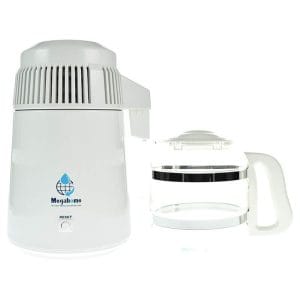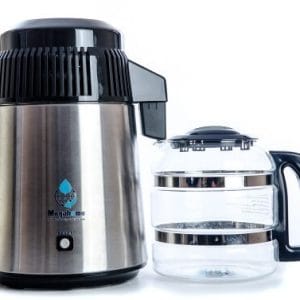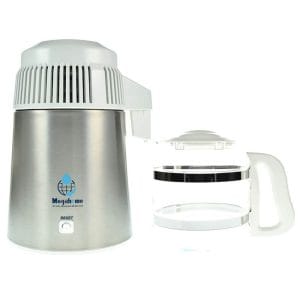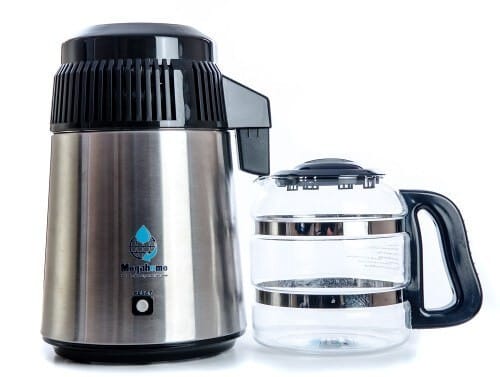
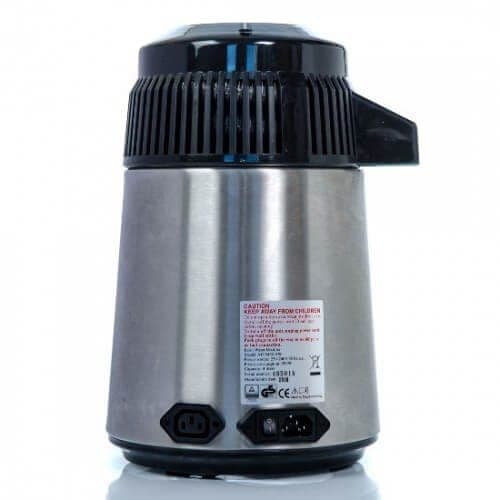
HIGH-CAPACITY MEGAHOME STAINLESS STEEL WATER DISTILLER WITH GLASS CARAFE
Today the most popular distillation system in the world.
The package contains everything you need for distillation for the first six months: water distiller, power cord, 4-litre glass collection carafe, 250 g of descaler, 6 activated carbon filters.
THE KIT INCLUDES:
CARBON FILTER FOR MEGA HOME DISTILLER
GLASS CARAFE FOR MEGA-HOME DISTILLER
LIMESCALE CLEANER 250 G
HOUSING: stainless steel.
TECHNICAL SPECIFICATIONS
Capacity: 16 litres per day
Size: 20 cm wide and 36 cm high
Power supply: 230–240 V AC
Power consumption 580 W (total)
Heater: 565 W / Cooling fan 15 W
Weight: 3.5 kg (7.7 lbs)
Output: 4 litres in 5–6 hours
HOW DOES MEGAHOME WORK?
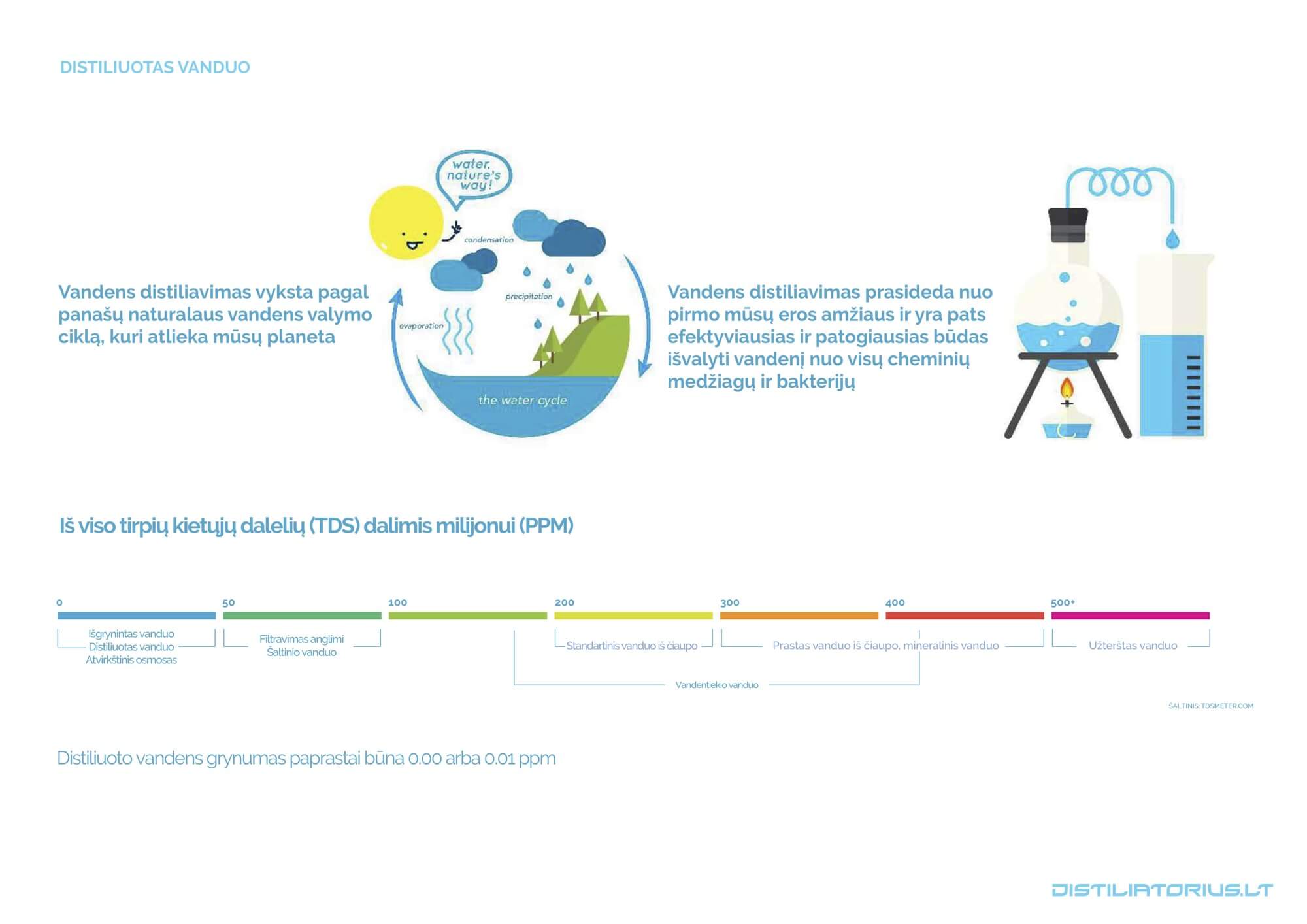
The water distiller first boils the water. This kills viruses and bacteria and separates contaminants. The steam enters a stainless steel coil, where it is cooled and turns back into water. This produces pure water. The water then passes through an activated carbon filter, which removes any last traces of impurities.
MEGAHOME 304 VS 316 – WHAT IS THE DIFFERENCE
Most water distillers are made of grade 304 stainless steel, which is standard commercial-grade stainless steel. Megahome 316 is the only distiller made of grade 316 stainless steel.
316 stainless steel is of higher quality than the standard grade 304. With a 316 stainless steel distiller you can distil sea water. Information on the differences between 304 and 316 stainless steel is given below.
INCREDIBLY EASY TO USE
The water distiller produces 4 litres of absolutely pure water in 5–6 hours. All you have to do is fill it, switch it on and let it run. The water drips into a glass carafe that can be kept in the refrigerator. It switches off automatically – no need to worry about overheating.
WHAT ARE THE ELECTRICITY CONSUMPTION AND COST
How to calculate the cost of distilling 4 litres of water
The distiller uses 580 W of electricity per hour
If the distillation process takes 6 hours, we calculate
580 W x 6 h = ~3.5 kWh
We use the price of one kilowatt-hour for a standard consumer, without considering day, night, weekend or similar tariffs (if you pay a different price, use your own tariff)
Price of 1 kWh = 0.13 EUR
3.5 x 0.13 = ~0.46 EUR
So we have calculated the cost of 4 litres of distilled water when distillation takes 6 hours. You can calculate the cost of your own process accordingly.
ACTIVATED CARBON FILTERS (SACHETS)
Do you have to use carbon filters? Charcoal filters out volatile organic compounds (VOCs) such as pesticides and solvents. Carbon filtration removes these chemicals and improves the taste of the water. Activated charcoal components: natural coconut shell. Functions: removes odours and improves taste. Service life: the activated carbon sachet should be replaced every 25 days. If the distilled water tastes or smells strange, replace the activated carbon sachet immediately. The water will taste better if you use 2 sachets at a time. Do not put unused, partly used or currently used activated carbon sachets in the refrigerator, as they can absorb odours there and give the water a bad taste. New activated carbon sachets may release a small amount of black powder, which is completely harmless. It is simply powdered charcoal and is safe. Sealed activated carbon sachets should be stored in a cool place. A new distiller comes with activated carbon sachets in the package, and they can also be bought separately.
HOW LONG DOES DISTILLATION TAKE?
Depending on the feed water temperature, the distillation process can take different amounts of time. If the water is very cold, the process can take up to 30% longer than at normal room temperature. For example, if the water temperature is 22 degrees (room temperature), the device needs on average 3–3.5 hours to distil the full amount of water. At about 8 degrees, it will take about 5 hours, and so on.
If the water tank is filled above the maximum fill line, the device has to evaporate more water than usual, so the process takes longer.
Since the operating power once the water boils is 350–850 W, if the household’s available power is low, the device automatically switches to low power to save electricity, so the distillation time will vary.
ABOUT DISTILLED WATER
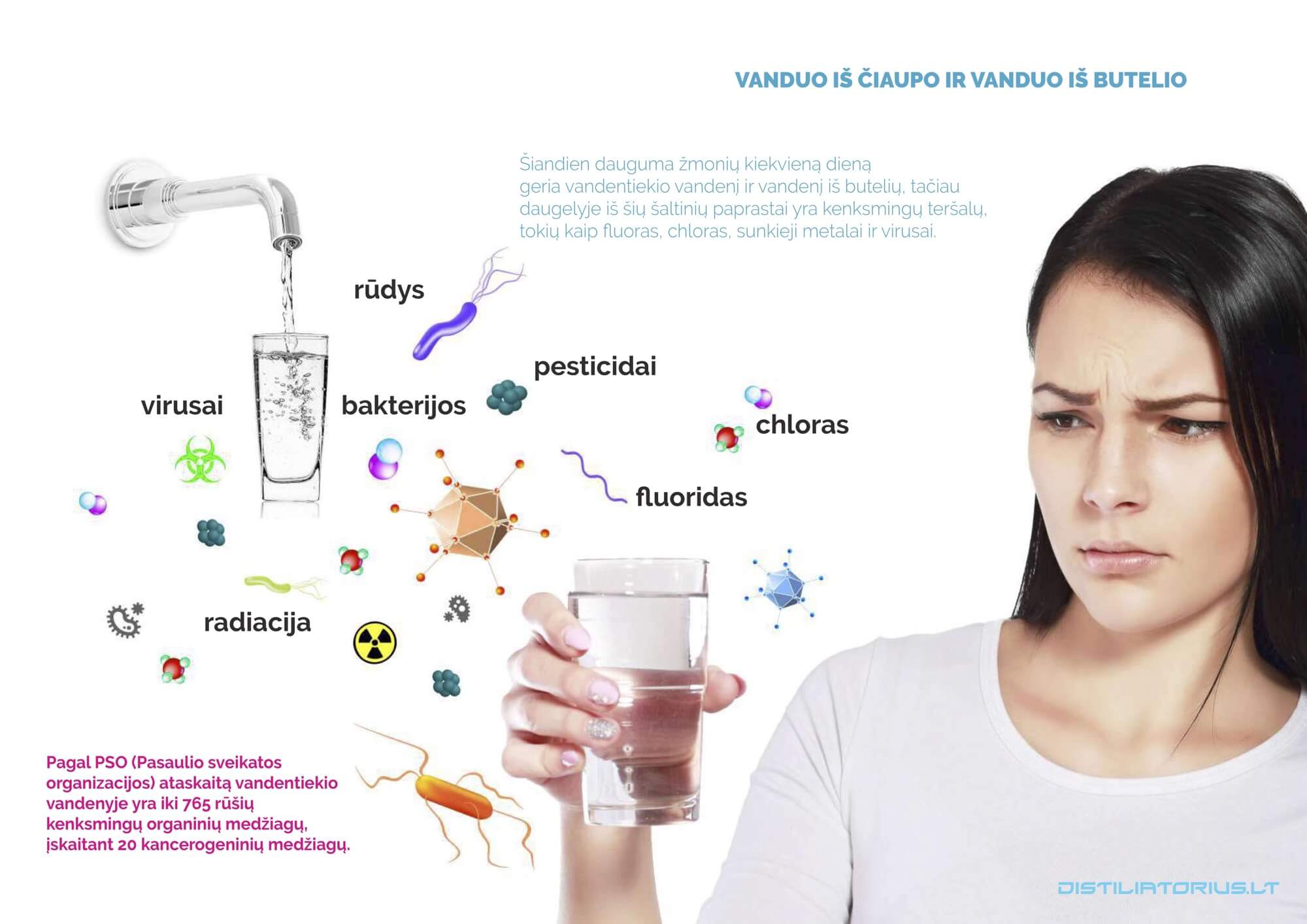
Distilled water is the purest, as it contains no additives or impurities. Distillation is the most practical water purification method, as it reliably removes all types of impurities. Health advocate Paul Bragg valued distilled water highly because it contains no salts. Have you ever tasted completely pure water? Tap water contains contaminants. Even bottled and filtered water contains impurities. And the problem is that if you don’t filter water before drinking it, your body becomes the filter. The only guaranteed way to get absolutely clean water is distillation. Distilled water is 99.8% pure. With distilled water, you use water that is cleaner than any bottled or tap water and cleaner than water treated by any other filtration or purification method.
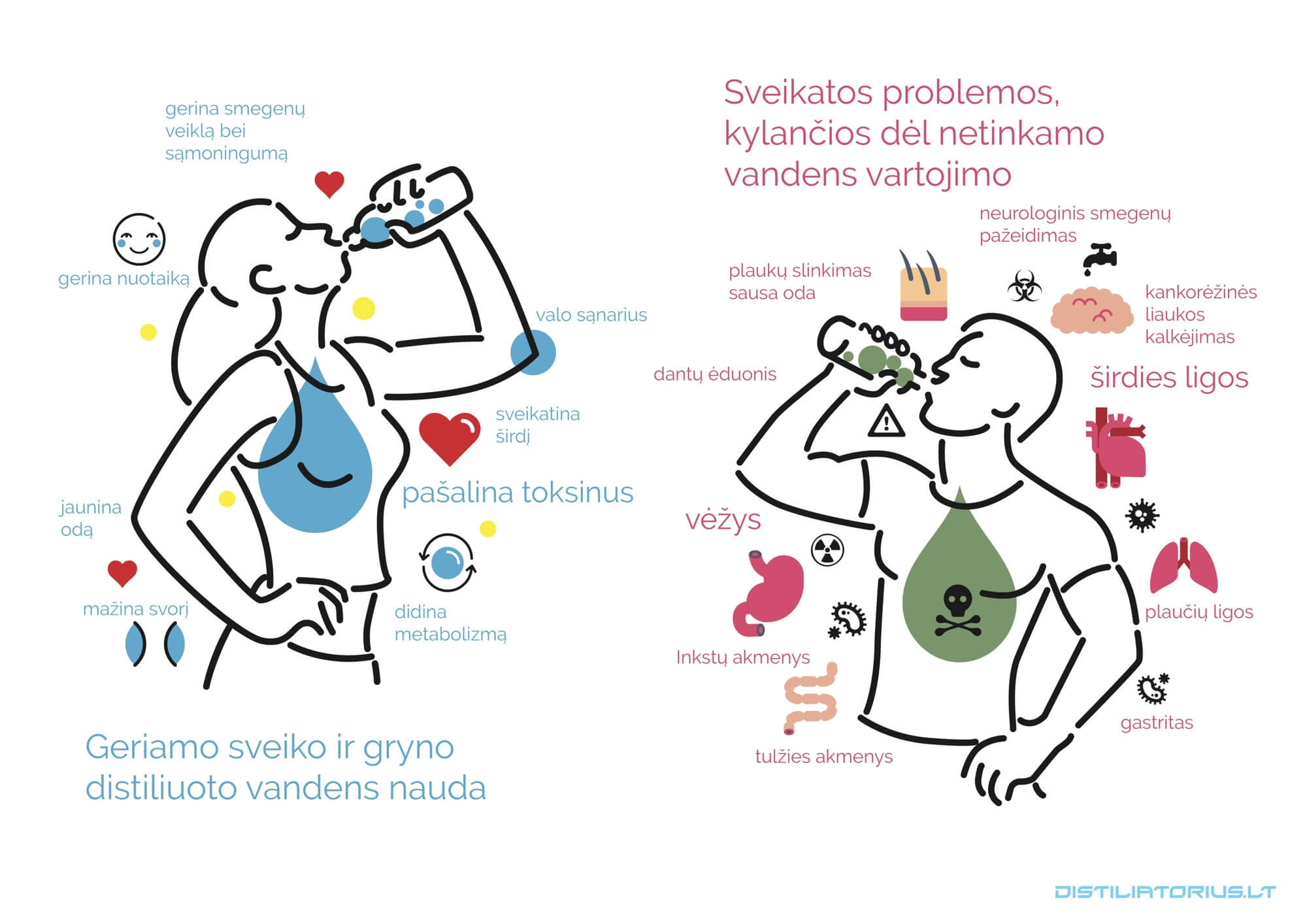
HOW IS IT DIFFERENT FROM BOTTLED WATER?
You will be surprised how many contaminants bottled water contains – and it is expensive too. Bottled water is often more expensive than petrol.
HOW DOES WATER DISTILLATION COMPARE WITH OTHER WATER TREATMENT METHODS?
The two other most common forms of filtration are activated carbon filters and reverse osmosis. Of these, reverse osmosis technology is more advanced. Our tests show that distillation is more effective than carbon filtration or reverse osmosis.
CLEANING THE DISTILLER
For the distiller’s heating system to work properly, it is recommended to clean limescale and other deposits from the boiling chamber once a month (or more often, depending on use). Acid-based (usually citric acid) cleaners are used for cleaning. One pack of cleaner is included with the distiller; when it runs out, cleaners are available from us.
DIFFERENCES BETWEEN 304 AND 316 STAINLESS STEEL
Stainless steels are divided into three groups – austenitic, ferritic and martensitic – depending on the amount of carbon and additives in the alloy and the physical properties of the alloys. Austenite is the densest steel structure. Austenitic steel is the most common and widely used. When choosing stainless steel that must withstand corrosive factors, austenitic stainless steel is usually used. With excellent mechanical properties and a high nickel and chromium content, it is highly corrosion-resistant. Two of the most commonly used austenitic stainless steel grades are 304 and 316. The differences between 304 and 316 stainless steel are not visible to the eye – two identical pieces of sheet metal look the same. Grade 304 stainless steel is the most common type of austenitic stainless steel. It contains a high amount of nickel (usually 8 to 10.5% by weight) and about 18–20% chromium by weight. Other main alloying elements are manganese, silicon and carbon. The rest of the chemical composition is iron. Grade 316 stainless steel, like grade 304, contains a lot of chromium and nickel, as well as silicon, manganese and carbon, with iron making up a large part of the composition. The biggest difference between 304 and 316 stainless steel is the chemical composition, as 316 contains molybdenum – usually 2 to 3% by weight, compared with only trace amounts in 304. The higher molybdenum content gives 316 its corrosion resistance. 304 stainless steel is very easy to form; because of the higher molybdenum content, grade 316 steel can be harder to form. Grade 304 is usually cheaper than grade 316. Here are some cases where 316 stainless steel is the better choice: the environment contains many corrosive elements; the item will be kept under water or constantly exposed to water; greater strength and hardness are required.
DIFFERENCES IN THE MAGNETIC PROPERTIES OF 304 AND 316 STAINLESS STEEL
Magnetic and non-magnetic stainless steel. The magnetic properties of stainless steel depend greatly on the alloying elements. Basic stainless steel is magnetic because of its chromium content. The nickel in stainless steel makes it theoretically non-magnetic. 304 stainless steel contains chromium (min. 18%) and nickel (min. 8%). It is an austenitic steel and reacts only slightly to magnetic fields. It also contains smaller amounts of other elements. 316 stainless steel is a molybdenum steel alloy. The fact that it also reacts only weakly to magnetic fields means it can be used where a non-magnetic metal is required. It also contains other elements.
Preparing the distiller for use: