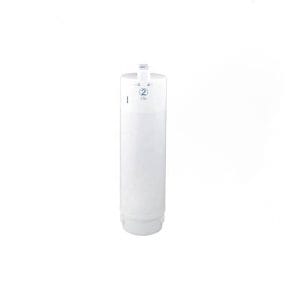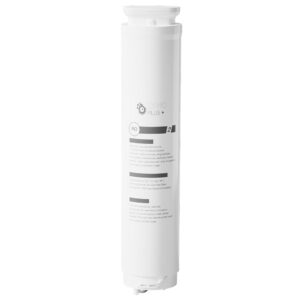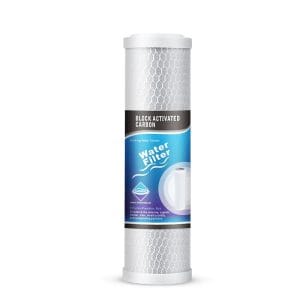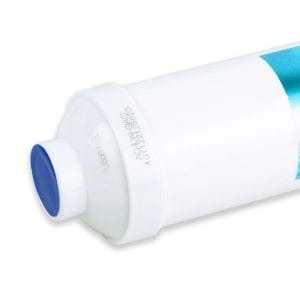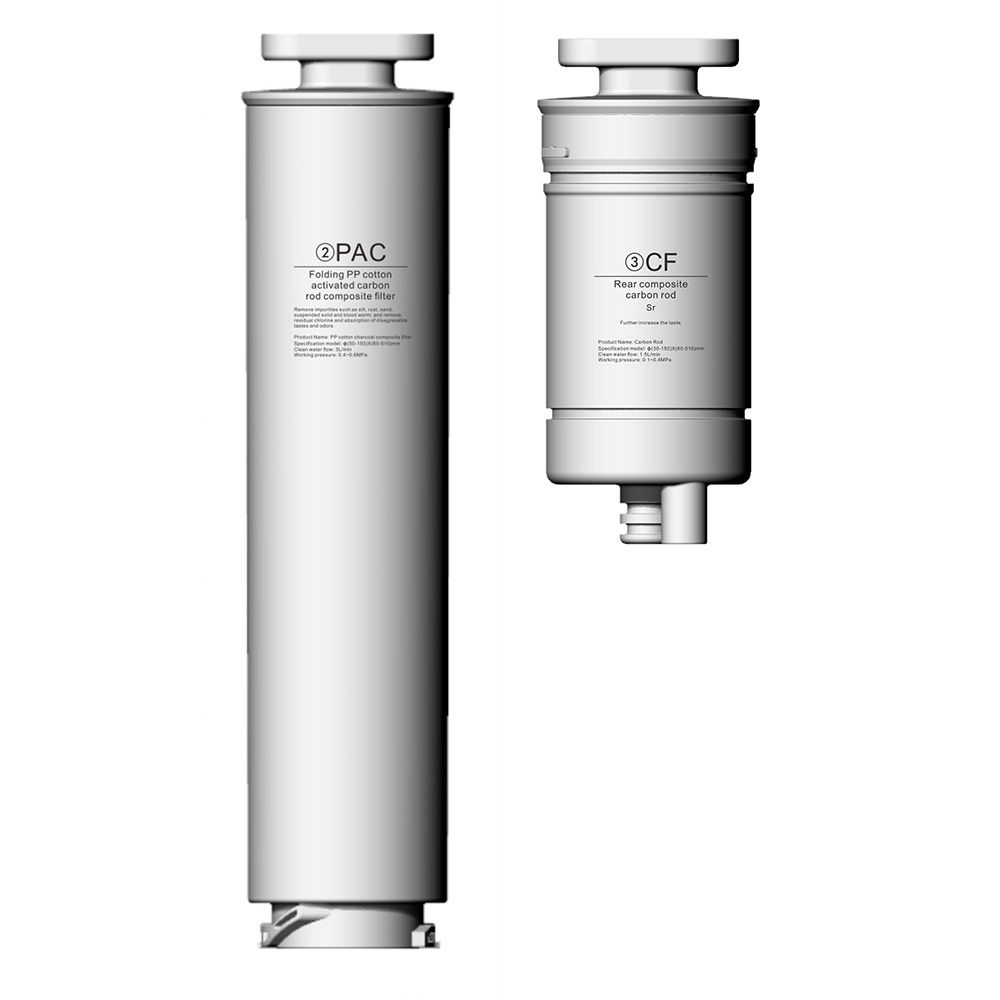
Replacement filter set for the OLANSI WL-12 countertop water filter.
FILTRATION STAGES
Stage 1: filters sediment, turbidity, rust, suspended matter, colloids and other impurities in water. Removes chlorine, odours, etc.
Stage 2: final carbon block filter. The last water treatment stage – removes all tastes and odours and improves the taste of treated water.
TECHNICAL SPECIFICATIONS
Feed water temperature: 4–38 ℃
Purified water flow: 0.130 ml/min.
QUICK-CHANGE FILTERS
Quick-change filters are filters mounted in housings with a quick-connect fitting. There is no need to disconnect hoses, remove the filter housing, unscrew it, take out the filter, insert a new one and so on. Replacing such filters usually takes just a few easy moves. These filters are slightly more expensive, but anyone can replace them easily – they are popular with people who appreciate being able to service the system without getting their hands wet.
FILTER MAINTENANCE AND REPLACEMENT INTERVALS
For the unit to work optimally, it needs regular maintenance. How often maintenance is needed depends on the feed water quality, how often the system is used and the amount of water filtered. The filter replacement intervals given for the filter are indicative. Remember that filter replacement frequency may vary, so we recommend monitoring changes in TDS in the purified water (measuring it at regular intervals with a TDS meter). If the TDS level changes significantly, replace the filters.
DISPLAY
Depending on the model, the device’s display shows the TDS level and/or information on filter use and when the filters need replacing.
TDS METER
The meter measures the total concentration of dissolved solids in a solution. The lower the TDS level in water, the more efficiently the body’s cells absorb the water you drink. The higher the TDS level in water, the greater the chance that it contains harmful contaminants that may pose a health risk or hinder the absorption of water molecules at cell level.
PPM
The usual unit for measuring TDS is PPM (parts per million) (1 ppm = 1 milligram of dissolved solids per litre of water).
BENEFITS OF REVERSE OSMOSIS WATER
Drinking more water is a smart and healthy choice! But there are many options for which water to drink. Bottled? From natural springs? From the mains water supply?
Reverse osmosis systems deliver clean, fresh water straight to your home. Here are a few reasons why it is one of the best choices.
Reverse osmosis systems deliver clean, fresh water straight to your home. Wherever you live, your tap water contains much more than just “H2O”. With a reverse osmosis system, however, you can greatly reduce unwanted contaminants. A special membrane filters out most microscopic organisms and heavy metals. These systems remove contaminants such as arsenic, nitrates and nitrites, fluoride, radium, barium, chromium, bromine, total dissolved solids (TDS) and more.
If pure water is what you want, you need a reverse osmosis system!
Reverse osmosis reduces sodium and softens water. Water softeners are designed to remove hardness minerals from water. They solve many problems, but they are not designed to purify water. You get water that is great for housework, bathing and laundry. But not everyone likes the taste of softened water. Remember that in the ion exchange process of a water softener, hardness minerals are replaced with sodium. The water still contains a large amount of dissolved solids, which affect the taste. A reverse osmosis system filters out the sodium that the softener adds to your water.
Bottled water is expensive. Plastic bottles are additional waste that pollutes nature, as too often they end up in landfills. Besides, bottled water is not as pure as you think. It is often just filtered tap water. A reverse osmosis system provides much cheaper and cleaner water. And when you need clean drinking water, it is right there in your kitchen.
Impurities in your tap water affect the taste of the food you cook. If you use tap water, it is very likely to contain too much chlorine. This not only changes the taste of food but distorts it. The taste and aroma of coffee and tea come through better when they are made with water from a reverse osmosis system.
Have you ever noticed that ice cubes look white and cloudy? This is caused by impurities and trapped gases in the water. Ice forms from the outside in, and as it does, the impurities concentrate in the centre of the cube, giving it a cloudy look.
If you like making cocktails, clear ice cubes will look great in your drinks. And there’s more! Cloudy ice cubes have been shown to melt faster than clear ice cubes made from pure water. This means that ice cubes made with water from a reverse osmosis system will keep your drinks cold longer without diluting them.
In addition to the membrane, which filters out contaminants, drinking water in a reverse osmosis system can also be filtered through a carbon filter before it reaches the faucet. The final carbon filter removes any tastes or odours.
Many families who start using water from reverse osmosis systems drink more water and fewer sugary juices, fizzy drinks and mineral water.
Are there any drawbacks? The only drawback skeptics mention is that reverse osmosis systems filter out minerals they consider valuable for the body. In fact, the minerals your body needs should come from the food you eat. In addition, the dissolved minerals in drinking water are inorganic, which means your body absorbs them poorly. This undermines their possible health benefits. Those worried about losing minerals can always take supplements or buy a special remineralisation cartridge for their reverse osmosis system. Some people add sea salt to reverse osmosis water.
The impressive benefits of reverse osmosis water far outweigh any minor drawbacks.
WARRANTY TERMS
24 months for personal use
12 months for commercial use