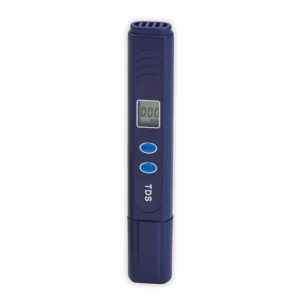
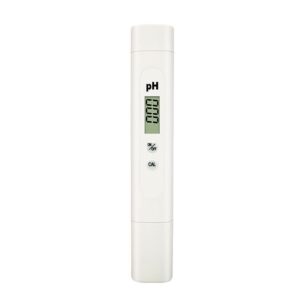
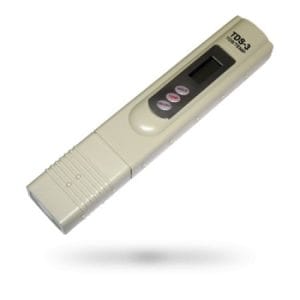
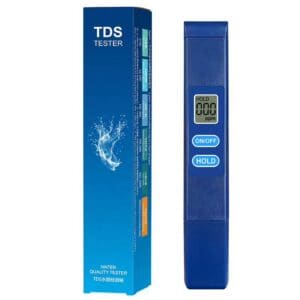
Digital water quality meter
The digital water quality meter is designed to test water quality and shows the total concentration of dissolved solids in a solution.
An economical model, ideal for end users.
TDS stands for “total dissolved solids”, which include soluble salts such as calcium, magnesium, etc., ionic organic compounds such as ammonium acetate, sodium, etc., and metal ions such as chromium, zinc, lead, copper, etc. TDS is measured in PPM, meaning “parts per million”, or simply mg/L, meaning “milligrams per litre”. Basically, the lower the reading, the purer your water. The WHO says any water with a reading below 300 ppm is fit to drink, although in theory you can drink any water up to about 1000 ppm. However, it may contain harmful chemicals.
TDS can be reduced by passing water through a reverse osmosis (RO) system. A good RO filtration unit can reduce dissolved solids by more than 90%. A TDS meter can check the purity of your water, but it cannot test for things like bacteria, viruses and other harmful substances. With a TDS meter you can check whether your water treatment unit is working well – does it reduce dissolved solids? First test the tap water and compare it with the treated water.
HOW TO USE
All you need to do is fill a cup with the water you want to test. Then press the button to switch on the meter and make sure it reads zero. Then place it in the water. Just wait a few seconds.
The LCD screen will show the water purity in ppm (1 ppm (parts per million) ~ 1 mg/l).
READING EXPLANATIONS (WATER QUALITY)
0-25 – good (water of this quality is obtained after distillation/reverse osmosis/ZeroWater filters)
25-100 – fairly good
100 – 200 – poor
300-600 – bad
600-999 – extremely bad
Users see the water’s TDS value on the LCD screen at the top.
The reading stabilises in about three seconds after testing the water with this device. It measures water quality in parts per million. Useful for testing drinking water quality (indispensable when using water filters), as well as for laboratory purposes, aquariums, pools and cooking. The lower the TDS level in water, the more efficiently your body’s cells absorb the water you drink. The higher the TDS level, the greater the chance that the water contains harmful contaminants that may endanger your health or hinder the absorption of water molecules at the cellular level.
Product photos may differ from the actual appearance of the products, but their properties and technical specifications will not differ from the description. Products in the shop may also differ in colour, shape or other parameters from their actual size, shape and colour due to the characteristics of the Buyer’s display.