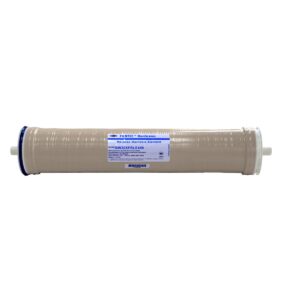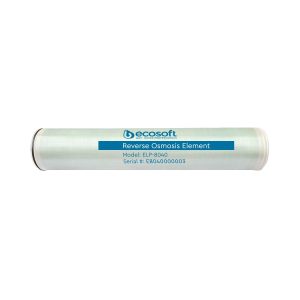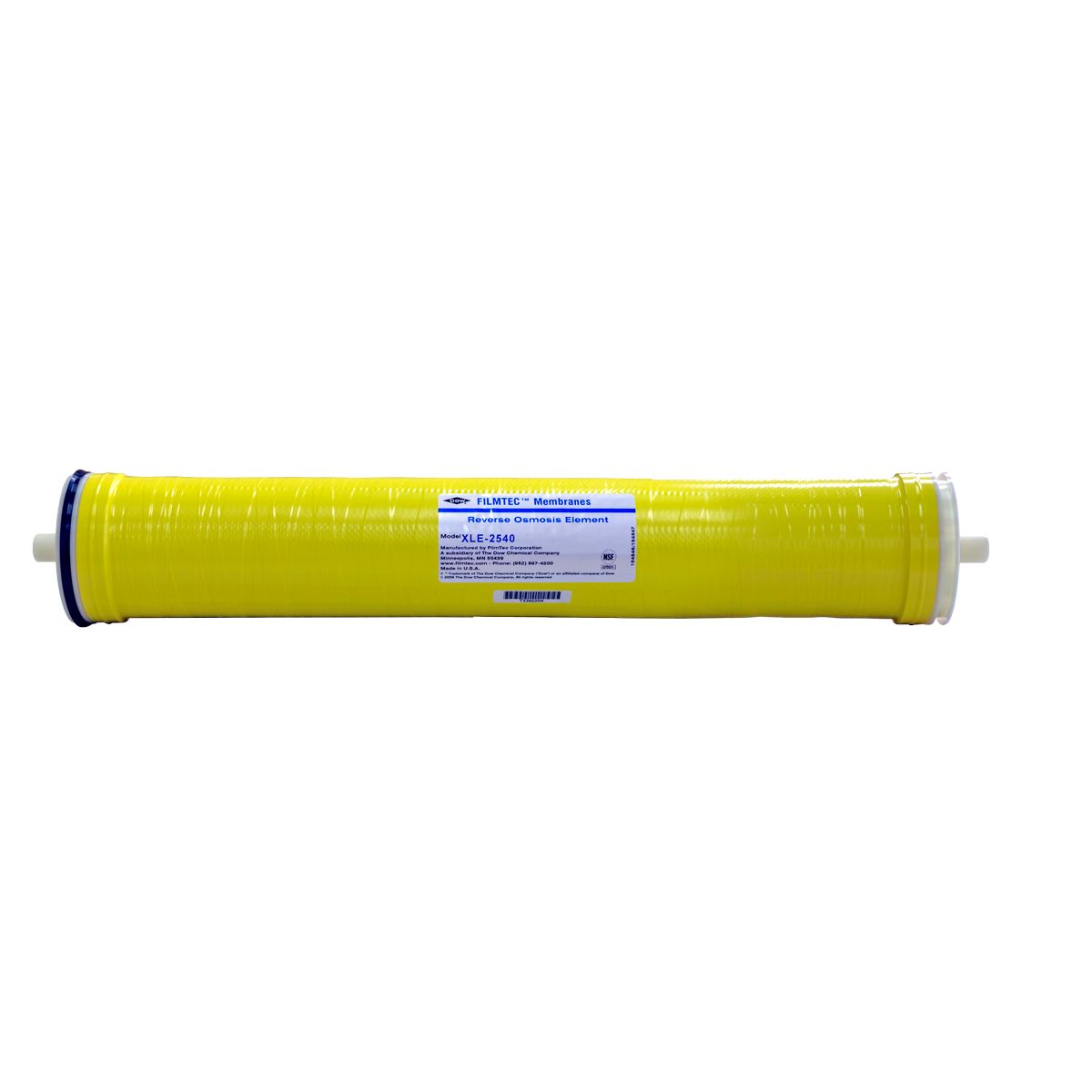
KEY FEATURES
- High flux ensures high output.
- Good water quality at very low operating pressure – for drinking water and commercial use.
SPECIFICATIONS
Main applications
- Drinking and commercial water systems up to ≤ 500 L/h (0.5 m³/h) – hotels, restaurants, cafés, car washes, schools, water refilling stations, etc.
Typical properties
- Nominal active area – 2.6 m²
- Permeate volume – 3.8 m³/day
- Stabilised salt rejection – 99.0%
Permeate flow and salt rejection are based on the following test conditions: 77°F (25°C), 15% recovery, applied pressure 125 psig (8.7 bar), pH 8, 2,000 ppm NaCl in feed water.
Minimum salt rejection – 97.0%.
Specifications may be updated periodically as part of product improvement.
Operating and cleaning limits
- Maximum operating water temperature – 45 °C
- Maximum operating pressure – 41 bar
- pH range, operating mode – 2…11
- pH range, chemical cleaning mode – 1…13
- Maximum feed water silt density index SDI < 5
- Free chlorine tolerance – <0.1 ppm
General information
- After initial wetting, always keep the elements moist.
- If the operating limits and recommendations in this bulletin are not strictly followed, the limited warranty is void.
- To prevent biological growth during long system downtimes, it is recommended to immerse the membrane elements in a preservation solution.
- The customer is fully responsible for the effects of incompatible chemicals and lubricants on the elements.
- Maximum pressure drop across the whole pressure vessel (housing) – 30 psi (2.1 bar).
- Always avoid static back-pressure on the permeate side.
- Avoid sudden changes in pressure or cross-flow in spiral-wound elements during start-up, shutdown, cleaning or other processes to prevent possible membrane damage. During start-up, the following gradual transition from standstill to operation is recommended:
- Increase feed water pressure gradually over 30–60 seconds.
- Bring cross-flow velocity to the set operating point gradually over 15–20 seconds.
- Using this product alone does not necessarily guarantee the removal of cysts and pathogens from water. Effective reduction depends on the overall system design, operation and maintenance.
- Permeate produced during the first hour of operation must be discarded (drained).
Important information
Proper start-up of reverse osmosis water treatment systems is essential to prepare the membranes for operation and avoid damage from overfeeding or water hammer. The correct start-up sequence also helps ensure that system operating parameters match design specifications and that water quality and output targets are met.
Before starting the system start-up procedures, membrane pretreatment, installation of membrane elements, instrument calibration and other system checks must be completed.
For more information see the application literature “Start-Up Sequence” (Form No. 45-D01609-en).