4 litres of pure water in 3–4 hours
With this water distiller, you have a reliable source of high-quality distilled water!
TECHNICAL SPECIFICATIONS
Voltage 220V
Frequency: 50–60 Hz
Easy to use
Switches off automatically
Power: 750 W
Power supply: 240V or 110V
Removes 99.8% of contaminants
Precautions:
Do not touch the water tank while the device is running and for 30 minutes after it stops, to avoid burns.
Suitable for use in medical facilities, households, laboratories, beauty salons and other industries.
IN THE PACKAGE
1 distiller
1 glass water container
1 lid
1 carbon filter
1 power cord
1 manual
Dimensions (L × W × H): 290 × 290 × 390 mm
Package size (L × W × H): 300 × 300 × 500 mm
SPECIFICATIONS
Easy to operate, no installation needed
Glass water container
Produces the safest and cleanest water
Durable, yet light and compact
Effectively removes contaminants from water
Outlet tube Stainless steel 304
Inner container stainless steel 304
Lid / filter stainless steel 304
Heater tube Aluminium
Water tank (246 ℃ / 474.8 ℉)
Gross weight 6.4 kg / 14.1 lb
Distilled water is best for pressure devices used to sterilise materials and instruments. Even filtered water contains various minerals, and a layer of limescale can form after temperature changes. Over time, this can cause steam leaks due to poor sealing. Limescale deposits can narrow pipes, cause pressure and temperature sensors to malfunction and lead to other faults.
Note:
1. With automatic overheating protection. The safe temperature is no higher than 110 °C; above that the power switches off automatically.
2. Rinse with distilled water before first use.
Make sure the power is switched off before cleaning or replacing the filter.
Use only power cords rated for the voltage to avoid fire or electric shock.
Plug in or unplug power cords only with dry hands.
Do not use the water distiller on an unstable table or moving surface.
Do not cover the fan.
Unplug the power cord when the water cycle is finished.
HOW LONG DOES DISTILLATION TAKE?
Depending on the feed water temperature, the distillation process can take different amounts of time. If the water is very cold, the process can take up to 30% longer than at normal room temperature. For example, if the water temperature is 22 degrees (room temperature), the device needs on average 3–3.5 hours to distil the full amount of water. At about 8 degrees, it will take about 5 hours, and so on.
If the water tank is filled above the maximum fill line, the device has to evaporate more water than usual, so the process takes longer.
Since the operating power once the water boils is 350–850 W, if the household’s available power is low, the device automatically switches to low power to save electricity, so the distillation time will vary.
ACTIVATED CARBON FILTERS (SACHETS)
Do you have to use carbon filters? Charcoal filters out volatile organic compounds (VOCs) such as pesticides and solvents. Carbon filtration removes these chemicals and improves the taste of the water. Activated charcoal components: natural coconut shell. Functions: removes odours and improves taste. Service life: the activated carbon sachet should be replaced every 25 days. If the distilled water tastes or smells strange, replace the activated carbon sachet immediately. The water will taste better if you use 2 sachets at a time. Do not put unused, partly used or currently used activated carbon sachets in the refrigerator, as they can absorb odours there and give the water a bad taste. New activated carbon sachets may release a small amount of black powder, which is completely harmless. It is simply powdered charcoal and is safe. Sealed activated carbon sachets should be stored in a cool place. A new distiller comes with activated carbon sachets in the package, and they can also be bought separately.
CLEANING THE DISTILLER
For the distiller’s heating system to work properly, it is recommended to clean limescale and other deposits from the boiling chamber once a month (or more often, depending on use). Acid-based (usually citric acid) cleaners are used for cleaning. One pack of cleaner is included with the distiller; when it runs out, cleaners are available from us.
DIFFERENCES BETWEEN 304 AND 316 STAINLESS STEEL
Stainless steels are divided into three groups – austenitic, ferritic and martensitic – depending on the amount of carbon and additives in the alloy and the physical properties of the alloys. Austenite is the densest steel structure. Austenitic steel is the most common and widely used. When choosing stainless steel that must withstand corrosive factors, austenitic stainless steel is usually used. With excellent mechanical properties and a high nickel and chromium content, it is highly corrosion-resistant. Two of the most commonly used austenitic stainless steel grades are 304 and 316. The differences between 304 and 316 stainless steel are not visible to the eye – two identical pieces of sheet metal look the same. Grade 304 stainless steel is the most common type of austenitic stainless steel. It contains a high amount of nickel (usually 8 to 10.5% by weight) and about 18–20% chromium by weight. Other main alloying elements are manganese, silicon and carbon. The rest of the chemical composition is iron. Grade 316 stainless steel, like grade 304, contains a lot of chromium and nickel, as well as silicon, manganese and carbon, with iron making up a large part of the composition. The biggest difference between 304 and 316 stainless steel is the chemical composition, as 316 contains molybdenum – usually 2 to 3% by weight, compared with only trace amounts in 304. The higher molybdenum content gives 316 its corrosion resistance. 304 stainless steel is very easy to form; because of the higher molybdenum content, grade 316 steel can be harder to form. Grade 304 is usually cheaper than grade 316. Here are some cases where 316 stainless steel is the better choice: the environment contains many corrosive elements; the item will be kept under water or constantly exposed to water; greater strength and hardness are required.
DIFFERENCES IN THE MAGNETIC PROPERTIES OF 304 AND 316 STAINLESS STEEL
Magnetic and non-magnetic stainless steel. The magnetic properties of stainless steel depend greatly on the alloying elements. Basic stainless steel is magnetic because of its chromium content. The nickel in stainless steel makes it theoretically non-magnetic. 304 stainless steel contains chromium (min. 18%) and nickel (min. 8%). It is an austenitic steel and reacts only slightly to magnetic fields. It also contains smaller amounts of other elements. 316 stainless steel is a molybdenum steel alloy. The fact that it also reacts only weakly to magnetic fields means it can be used where a non-magnetic metal is required. It also contains other elements.
ABOUT DISTILLED WATER
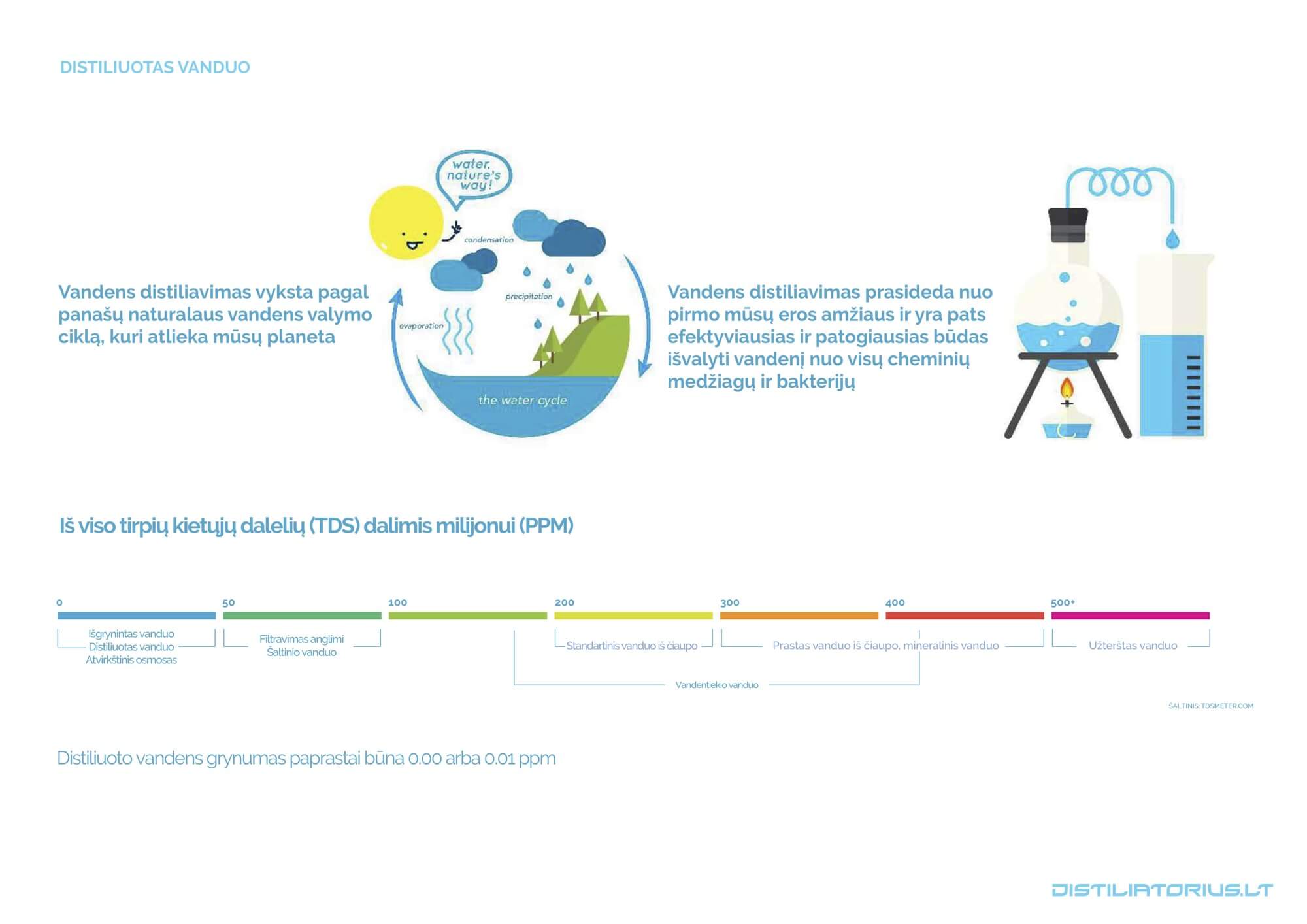
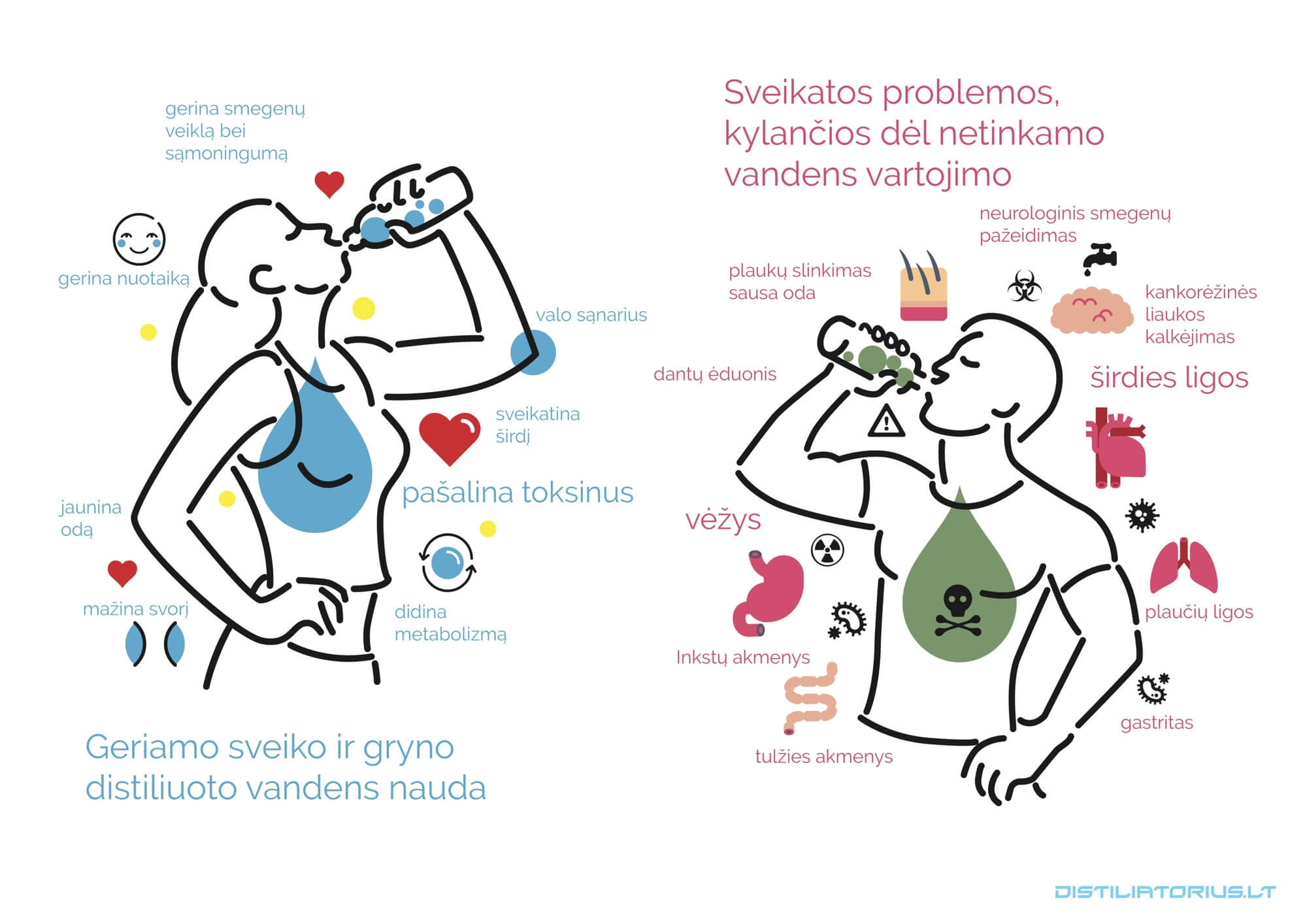
Distilled water is the purest, as it contains no additives or impurities. Distillation is the most practical water purification method, as it reliably removes all types of impurities. Health advocate Paul Bragg valued distilled water highly because it contains no salts. Have you ever tasted completely pure water? Tap water contains contaminants. Even bottled and filtered water contains impurities. And the problem is that if you don’t filter water before drinking it, your body becomes the filter. The only guaranteed way to get absolutely clean water is distillation. Distilled water is 99.8% pure. With distilled water, you use water that is cleaner than any bottled or tap water and cleaner than water treated by any other filtration or purification method.
HOW IS IT DIFFERENT FROM BOTTLED WATER?
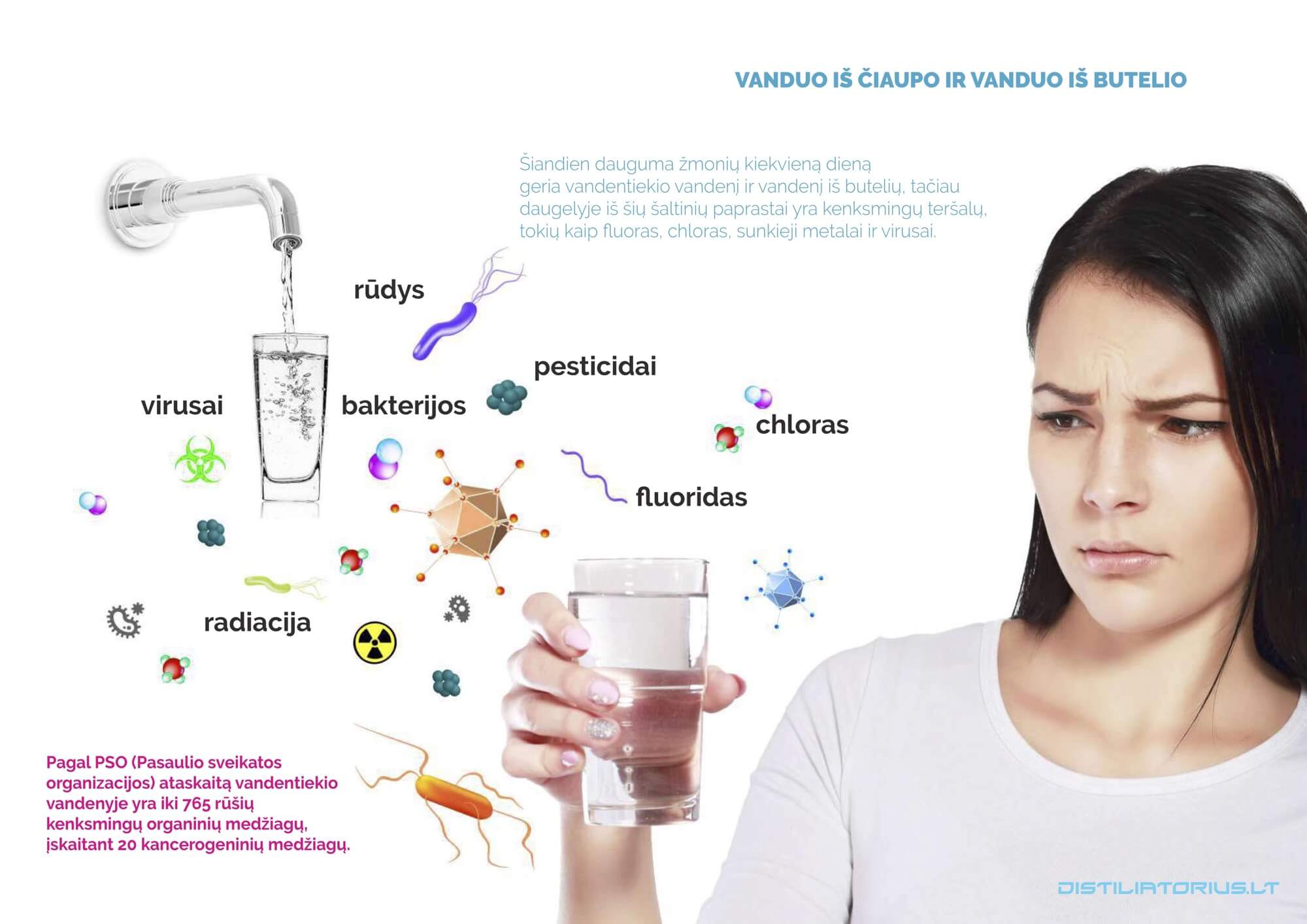
You will be surprised how many contaminants bottled water contains – and it is expensive too. Bottled water is often more expensive than petrol.
HOW DOES WATER DISTILLATION COMPARE WITH OTHER WATER TREATMENT METHODS?
The two other most common forms of filtration are activated carbon filters and reverse osmosis. Of these, reverse osmosis technology is more advanced. Our tests show that distillation is more effective than carbon filtration or reverse osmosis.